

Pope Francis wants mercy—and he wants it now. So to make sure this mercy happens, the Holy Father has taken an extraordinary step
He is sending out “Missionaries of Mercy”—1,071 of them. These priests are NOT a religioius order. Instead, these missionaries are something more remarkable. Handpicked, just for the Year of Mercy! These handpicked priests from around the world will spread the message of mercy to the world.
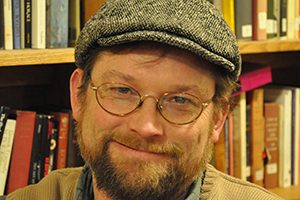
On Ash Wednesday, Feb. 10, in St. Peter’s Basilica, Rome, Pope Francis officially commissioned the Missionaries and celebrated Mass with 700 of them. Among the Missionaries present was Monsignor Thomas Richter, rector of the Cathedral of the Holy Spirit in the Diocese of Bismarck, ND.
Catholic Business Journal spoke with Monsignor Richter about this special privilege, about his role as a Missionary of Mercy during this Jubilee Year of Merch, and about how the Missionaries’ work epitomizes the Year of Mercy in action.
Sending out
First described in his 2015 papal bull declaring the Year of Mercy, “The Face of Mercy” (Misericordiae Vultus), each Missionary of Mercy has been nominated by his diocesan bishop or religious superior as an exemplary priest suited to the work of mercy.
“They will be a sign of the Church’s maternal solicitude for the People of God,” Pope Francis writes in his announcement, “enabling them to enter the profound richness of this mystery so fundamental to the faith.”
The Missionaries, Pope Francis says, are to be “a living sign of the Father’s welcome to those in search of forgiveness.” Among their duties, these Missionaries are to lead the faithful to mercy through confession, preaching and personal encounters outside of Mass or the confessional box.
Diocesan bishops around the world have been instructed to invite the Missionaries to offer missions on a parish, deanery or diocesan level, with special focus on the Sacrament of Confession. Each Missionary will carry with him a letter of recommendation from his diocesan bishop or religious superior testifying to his suitability to serve.
In his announcement, Pope Francis also says that while the Missionaries of Mercy have a special task, all priests around the world are enjoined to continue the merciful work to which they were originally ordained.
“May pastors,” he writes, “especially during the liturgical season of Lent, be diligent in calling back the faithful ‘to the throne of grace, that we may receive mercy and find grace’ (Heb 4:16).”
Why me?
“I have no idea how my name was offered, presented or selected,” Monsignor Richter tells Catholic Business Journal. “I don’t know that process. All I know is that in the second week in December I received a call to go to the office of my bishop, Bishop Denis D. Kagan, who read a letter from Archbishop Rino Fisichella, president of the Pontifical Council for Promoting New Evangelization…stating that Pope Francis has requested that I be a Missionary of Mercy for the Year of Mercy and that Bishop Kagan was willing to release me.”
While many of the 125 or so American Missionaries of Mercy from America will operate within their dioceses, Monsignor Richter will be spreading mercy’s mission to other diocese in the country.
“My diocesan bishop and I decided for the greater good of the Church that I go outside the Diocese of Bismarck,” he says. “We feel that the priest shortage felt throughout the country is not as great here in Bismarck, and that the Lord has blessed our diocese with great vocations…. So we thought it fit to share this special work of mission with other dioceses.”
With the permission of Bishop Kagan, Monsignor Richter, a priest for 20 years, will be traveling around the United States—from larger East Coast dioceses, such as the Diocese of Bridgeport, CT, to smaller dioceses such as the Diocese of La Crosse, WI. He will be offering parish missions with ample opportunity for confession and spiritual counsel.
Word and deed
At the Ash Wednesday Mass in Rome, Monsignor Richter says, the pope made it clear that the Year of Mercy was not only going to be preached but primarily put into sacramental action in the confessional.
“In his address to the Missionaries of Mercy, his message was almost entirely focused, not on the pulpit but on the confessional,” he says. “He also spoke about the faithful’s encounter with the mercy of God, as an encounter with God the Father, and that this encounter would be done through preaching and in a preeminent way in the sacrament of reconciliation where Christ told St. Faustina Kowalska (1905-1938) [who popularized the Catholic devotion to the Divine Mercy] that he is mercy incarnate, concrete mercy where all faithful can encounter his healing.”
The address was music to Monsignor Richter’s ears because of his great love for the sacrament of confession.
“I hope on my missions that I get to sit in the confessional 8-10 hours a day,” he says. “In the city center parishes, I hope to attract a large number of people to the confessional. There are a lot of people out there who are broken, hurt and doubt whether the mercy of God can conquer sin.”
The papal address was underscored, Monsignor Richter says, by the presence of two remarkable relics at the Ash Wedesday Mass—the incorruptible bodies of St. Leopold Mandic (1866-1942) and St. Pio of Pietrelcina (1887-1968), both Franciscans famous for their work in the confessional.
A Capuchin monk, St. Leopold was noted for spending between 12-15 hours a day in the confessional for 30 years despite a debilitating condition which left him with frail health.
His fellow Capuchin, St. Pio, known as Padre Pio, received the stigmata, often spent 10 hours in the confessional, and was reported to have had the gift of reading souls—discerning sins before they were confessed.
“So it was clear,” Monsignor Richter says, “that Pope Francis was holding up not great preachers but great confessors as models for our work as Missionaries of Mercy.”
Special work
Among the special privileges he received as a Missionary of Mercy, Monsignor Richter says, he will be able to forgive “reserved sins.”
“These are sins that carry a penalty—what’s known as a censure, an automatic excommunication,” he says. “By placing such a penalty on such sins, the Church is saying that this is a sin so grave in a culture that doesn’t think it’s a grave sin that it’s going to be emphasized with a censure.”
With such a sin, Monsignor Richter says, the permission of a bishop or the Holy See is normally required to lift the mandatory censure.
“Reserved sins would be things like the desecration of the Eucharist or a priest breaking the seal of the confessional,” he says.
During the Year of Mercy, though, the pope has extended these powers to the Missionaries, Monsignor Richter says, to make clear that mercy is essential for salvation and that it can be found, readily available, in the Catholic Church.
As Missionaries of Mercy, Monsignor Richter says, “we have the power to forgive even these grave sins. But through our work, the pope also wants to impart his unwavering and emphatic message that, no matter what the sin, the Church is a mother who is as merciful as she can be to the people of God. In other words, if you want to encounter the mercy of God, then the Catholic Church is the place to come.”
—————————————————–
Joseph O’Brien is a Catholic Business Journal correspondent. He may be reached at JOBrien@CatholicBusinessJournal.biz