

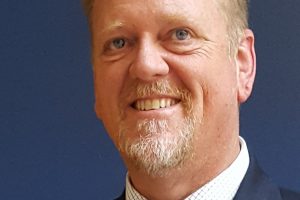
It’s a commonplace in education that “a textbook is only as good as the teacher who teaches it.” But according to Michael Van Hecke (pictured left), a seasoned headmaster of a Top 50 school and the founder of the Catholic Textbook Project, sometimes an exceptional textbook can transform a good teacher into a better teacher—or even into a great teacher.
Founded in 2000, the Catholic Textbook Project brings a Catholic worldview to the teaching of history in classrooms around the U.S. Since its founding, teachers and students in Catholic schools and homeschools have discovered a wellspring of wonder and wisdom in the scholarly and exciting stories of history. The history textbooks are now used in schools in more than 90 dioceses and in English-speaking regions worldwide.
Instead of a dry recounting of events, dates, names and places found in a typical K-12 history textbook, users of Catholic Textbook Project’s textbooks read well-crafted, exciting stories of truth and virtue, human actions and decisions that render the past a living part of the present. Unawares, these textbooks prepare students to face the future well-anchored in a rich moral and intellectual formation and in an accurate understanding and appreciation for the men and women of past generations on whose shoulders we stand today—including Catholic religious orders, lay men and women whose choices significantly impacted the course of history—for better or worse.
Catholic Business Journal spoke with Mr. Van Hecke about the Catholic Textbook Project, his role in its founding, how and why these textbooks aim to present the true, the good and the beautiful in the history of man’s works and days, and about what it takes behind-the-scenes to make this textbook publishing company a success.
Catholic Business Journal (CBJ): How did the Catholic Textbook Project get started?
Michael Van Hecke (MVH): Prior to starting the Catholic Textbook Project, I taught history at a Catholic school in New Hampshire. At the time, I was using a beautiful secular textbook in the classroom, but it lacked any compelling narrative of a balanced presentation of history. It was what one might call very “PC.” I also had researched and used photocopies of stories on Catholic figures in history. Because I had all these photocopies and the students had the book, I ended up giving a lot of lectures and telling stories that were engaging to the students.
Shortly thereafter I became a principal and decided that, based on this experience in the classroom, I wanted to buy history textbooks that were written for Catholic schools. I didn’t want my teachers to have to prepare classes from two separate sets of materials as I had done. But in my effort to buy textbooks that had a Catholic worldview of history, I found there weren’t any. I learned no such history textbook had been published in nearly 40 years! I was shocked.
I began working with some colleagues to address this problem and we decided to produce our own history textbooks for Catholic schools. Not long after that, I moved to Phoenix, but continued with the idea of producing our own history textbooks. Around this time, I was able to secure a generous bequest from a lady who thought this textbook project was a grand idea. So we set-out to produce our first five textbooks, or so we thought at the time.
The bequest was for $40,000. I thought we could produce the first five books with that amount. But it turned out that renting just the artwork for the first printing of the first book was $33,000! Needless to say, there was a steep learning curve to figure out what the publishing industry was all about. That’s our beginning.
CBJ: How did you acquire the capital, to supplement the project, and the know-how to put a textbook together according to industry standards?
MVH: For capital, we received advance on royalties, having contracted with Ignatius Press to be our first publisher. A generous grant from the Ave Maria Foundation and about $500,000 from friends and family, including gifts and loans, got us through the first few years. We felt we had Ignatius Press’ experience in publishing to guide us through those elements we didn’t know.
As it turned out, our textbook product was really outside the wheelhouse for Ignatius Press at the time and they saw it as ultimately too expensive to keep funding. That said, we produced our first two books with Ignatius Press. That was a huge help. Ignatius Press helped us get published – without them, I don’t think we would have ever published our first textbook.
CBJ: So where did you go from there?
MVH: As we were working on the first book we found an exceptional graphic designer to put the books together, Gary Hespenheide of Hespenheide Designs. It turns out that by God’s Providence we had in Gary a world-class graphic designer. He became our hands-on connection to the publishing industry at a deeper level. He showed us how to put the textbook together, design it, paginate it, index it, copy edit it, fact check it, etc. Gary also had all the other connections we needed in the industry – printing houses, warehousing, digital delivery systems, etc.
CBJ: What gives Catholic Textbook Project books their sturdy manufacturing design?
MVH: The first textbooks were printed in China, with Ignatius Press. Those textbooks fell apart very fast. They were not up to the endurance required of a school textbook that needs to hold up to student use for at least seven years. We quickly moved the manufacturing back to North America, and Gary found us another press in Canada. These printers were better but still not great. Finally, we went to RR Donnelley, a Fortune 500 commercial publisher. They do all their printing in the U.S., and meet or exceed requirements for public school textbook printing and binding specifications.
CBJ: Why did you make a sturdy textbook such a priority?
MVH: Students are not gentle readers to say the least. And add to that, our books are made to be beautiful, with lovely art, which necessitated a glossier paper. This made the books a bit heavier, which necessitated stronger bindings. After our initial publishing experiences, however, I was not going to take chances with our new arrangement. So, as soon as I received my first copy of the textbook from RR Donnelley, I put it out in the parking lot in my school where I am headmaster and let all the parents’ Suburbans and 15-passenger vans run over it as parents were picking up their children at the end of the day. The textbook stood up! It was pretty scratched, but the binding held. So I thought, OK, we found our printer.
CBJ: Has the Catholic Textbook Project turned a profit since it started?
MVH: From a cash-flow perspective, our company has finally made money to the point where we’re paying all our bills and keeping ourselves afloat, but we’re not making the kind of money we need to make in order to produce more textbooks without funding help. Principals and teachers are asking for more volumes for more grades, so we’re still fundraising. We’re a non-profit and since we’re still keeping the prices below industry averages, we still engage in fundraising and sponsorship campaigns in order to fund additional series, textbooks and production phases. One Los Angeles foundation gave a grant of nearly $300,000 to help get the books into local diocesan schools – this was a huge help to those schools.
CBJ: Why did you decide to produce textbooks and not reprint or recommend primary sources to get at the truths of history? What advantage does a textbook have?
MVH: There are three advantages to a textbook. First, a textbook can be is a good tool for learning since it can train a child to read well and carefully. Second, a good textbook sandwiches between two covers a narrative, a story, a picture-in-words of what happened in history during a given time period or across a span of time. This is important as children are learning the scope, or the arc, of history. They learn the arc of what happened when it is all put together in a flowing narrative. Using only primary sources can be disjointing in terms of a student understanding how events or decisions interconnect. Primary sources still require an understanding of the arc in which events, decisions, and so forth took place.
Third, learning from a textbook in school is part of the culture we live in. Although we encourage students and teachers to dig deeper at any time with primary sources, if we want to use a medium of learning with which students are familiar in the 21st century educational environs, a textbook is the best way to reach them. Our teacher manuals are rich with suggestions for additional primary sources, along with literature, art and music connections relevant to the particular unit in history.
CBJ: Aren’t all textbooks pretty much the same in their format and presentation?
MVH: Definitely not! Not all textbooks are created equal, nor are they equally capable of engaging a student.
I was interviewed on CNN a few years ago on the frustration of many educators regarding bad or ill-written textbooks. In the conversation, we discussed how unreal ill-written textbooks are, compared to other things people read in everyday life—a sustained paragraph or a sustained argument across several paragraphs, rather than pictures and graphs splashed over the pages of USA Today and similar publications, or MTV versions of history.
Our textbooks stand apart. We use the textbook as a tool that employs beauty in layout, graphics, design, photos and maps, because these appeal to the human eye and imagination. Our textbooks employ a narrative writing style, because the grammar of history is integral to the stories of history. If you’re not reading history that has been written in a narrative manner, it is not history but social studies, which is cold and bland.
CBJ: What has been the response to those who discover the Catholic aspect of your history textbooks?
MVH: Teachers, especially those in Catholic schools, and also Catholic homeschooling parents love our textbooks. They praise the narrative style, the story approach, and the beautiful pictures. They say these elements make our textbooks enjoyable to read. But this praise pales in comparison to the praise we receive regarding the way we tell the fullness of history, including the historically significant contributions by Catholic men and women throughout more than 2,000 years worldwide. Users of our textbooks are truly appreciative and delighted to find it all in one, extremely well-crafted, well-researched and well-written history textbook series.
CBJ: The Catholic Church has played, and continues to play, such a big part in the cultural changes over the years in different nations and cultures, in the founding of hospitals, colleges and universities, the K-12 parochial system and much more, so how could a secular history textbook leave any of this out?
MVH: In today’s educational environment there is an underlining nihilism of which most teachers are not even aware and a misguided pluralism that grants everyone their own truth. You can’t say one claim to the truth is true and another isn’t because that wouldn’t be nice, and if it’s not nice you can’t do it, says the secular world. Ultimately, the secular world has to deny truth, and if they’re denying truth then they’re incapable of teaching the reality of history, of what truly took place in the past.
If you tell 99 out of 100 people in America that our textbook is more scholarly because it comes from a Christian worldview, they’ll think you’re nuts, but in reality we’re actually right. How do you say that in the modern world? You can’t. Like so many before us in history, we have confidence in Truth, and in our Faith, so we move and act on that – not on the fickle winds of political popularity.
We see the Catholic Textbook Project as very instructive to both the student and the teacher. When teachers begin to teach from our textbooks, they are really telling the narrative of a Christocentric view of history; telling it with beauty and in story. In the process, the teacher learns history better. It worked that way for me.
Even secular university professors, such as the late Kevin Starr, a multi-award-winning historian, a former California state librarian, and a former professor at the University of Southern California, said our textbooks are terrific because they tell the story of history. Another high-ranking secular professor at UC Santa Barbara remarked that students who learn from our history textbooks will come to college knowing more about history than most of their peers and some of their professors. This kind of praise speaks to the scholarliness of our content, even though our textbooks use an engaging narrative and even though we include significant historical contributions of Catholic men and women. It’s just history, the full story.
In contrast to the praise of secular university professors, I had two beautiful religious sisters come to our booth at the National Catholic Education Association conference one year. They told us our books were beautiful and asked if they came from a Christian perspective. We told them the books were written from a Catholic worldview. Their faces dropped a bit, and then they asked “how do you know the books are objective?”
That’s so sad, I thought. These beautiful religious women who have given their lives as brides of Christ and yet they didn’t trust history textbooks because they convey history from the viewpoint of the Lord of History, from the viewpoint of the Author of all that is. It is so illustrative of the depth of the problem we face in the educational field and in the textbook industry in which we work.
CBJ: What’s the difference between history for Catholic students and Church history?
MVH: We are not publishing Church history books. That’s not what we do. We are producing HISTORY textbooks.
Church history is an examination of the Catholic Church as an institution. Church history looks at the interaction and interplay of actions, decisions and consequences of the Church as an institution. That’s what Church history is. It is not what we do. We recount history. Pure and simple.
For example, when the Catholic Textbook Project looks at American history, we’re writing about American history and about the United States of America. This country has a lot of elements to its founding and formation that are Protestant and Masonic. There’s also much that is classical in thought that went into the founding of our country’s governmental structure.
There’s a lot of Catholic influence in the country’s founding too. For instance, there’s a profound element of Catholic involvement in the Southeast and the Southwest. In a typical modern American social studies textbook, the authors are not so much concerned with history as a matter of culture as they are with history as a matter of chronologically connected events.
If you start to look at, talk about and think about culture, then you have to start to make judgments. For the secular social studies textbook, it doesn’t matter whether the historical figure is Catholic or not when he signed a bill or fought a battle. It just says he signed a bill or fought a battle. But if the figure is a Catholic and he was going against Catholic teaching when he signed a bill or fought a battle, that’s worth mentioning. There are some real cultural issues involved in the study of history.
If a Catholic figure is advancing the Church’s teaching on social justice—even if he’s doing it from a “secular” perspective as far as everyone else sees—it’s also worth noting that he might be taking a certain action because this is his philosophical view of humanity.
We’re writing about the history of the country, or the history of the world, as far as individuals and nations interplay with one another in developing civilization. Whether you love or hate the Catholic Church, if you’re really honest, you can’t ignore the Catholic Church’s influence in the development of that civilization.
That said, the modern secular social studies textbook tends to write the Church out of history in large part. They’ll never totally write it out but they have to write it out in large part because they’re trying to reach a secular world that will not abide anything religious. Rather than cause controversy, they cut it out. There are many forces at play which alter the content included in modern history books, and ultimately make it bad history.
CBJ: Do you think your educational background influenced your decision to take on this project in the first place?
MVH: The most important element of the education I received as a student came from my parents spending so much time fighting the schools. By the time I graduated from high school I knew one thing: education was important. I had a lousy education, but that was the one great lesson I learned from my elementary and secondary education. The English classes were terrible—they never taught us to diagram or learn the basics of grammar; it was mostly touchy-feely stuff in the classroom. It was the 1970s. There was no rigor in the basics; there were all these experimental, educational practices that got thrust upon us students.
It was also the time of “values clarification,” with no sense of a catechism or of morality. In the secular subjects, I received a bland, weak, mindless education that did not challenge us, did not inspire us, and did not form us. It was the time of New Math, Whole Language and all those other edgy things that came along.
CBJ: Did your education change in college?
MVH: When I applied to Thomas Aquinas College, I was asked to write about my favorite book. I wrote on Shakespeare’s Hamlet because it was the only book I read in high school—and that was a Catholic high school! From a raw, totally secular mindset, the schooling was just bad.
At Thomas Aquinas College, I experienced vicariously a great culture of learning. I experienced history, the questions I was supposed to have as a man and as a human being; I learned all those things I was supposed to learn in grade school and high school such as grammar and math and the basics of science and history. I also learned that those basics allowed me to think about things and talk to people about things and find better ways to be just and virtuous and wise.
CBJ: How did you fare when you received your education administration degree after college?
MVH: That was the third phase of my education; I was taking education classes—“Ed School” as it was called, where I learned that the government schools would only be considered truly successful once they have enrolled children from six weeks to 26 years old. I had professors who actually said that. I had class after class in multiculturalism and all these state and federal laws to learn, but nothing about the subjects we were teaching, nothing about the true nature and purpose of education.
Ultimately Ed School was about the public school system and how to keep it going, and how to work all the widgets within its system. Ed School taught me that education was simply a factory we needed to operate and we needed to make sure that the factory was indispensable. It was a pretty dark image of education and the future. I understand Dickens’ Mr. M’Choakumchild and Mr. Gradgrind so much better now!
CBJ: How did you stay true to the vision of true education?
MVH: These three phases—the bad schooling I received in my youth, my college years at Thomas Aquinas College, and the postgraduate work at Ed School—formed me in my desire to continue the career path I had started. It convicted me in advancing the Western intellectual tradition. I saw it as essential to educating children in the basics and educating them with an eye to developing in them personal wisdom and virtue.
CBJ: How has the Catholic Textbook Project deepened your faith?
MVH: Suffering always makes one’s faith stronger, right? But more seriously, the biggest thing the project has done for me personally is taught me how much to trust in God in the work of the Catholic Textbook Project. You would think that a product that is so much better than the deficit out there would take off like wild fire and everyone would want it instantly. But that’s not the case. So you have to keep working, trying and explaining your vision. Little by little it starts to grow and word gets out. Then people try it, use it, and start to see a different vision of how history can be taught and what history means. That’s a beautiful thing.
The project should have been dead many years ago, but in His providence, God keeps us going. We started this project almost 20 years ago and talking to teachers and superintendents from 10, 15 years ago, the Catholic school market wasn’t ready for this book or for the idea of Catholic identity in textbooks that are not religion textbooks.
CBJ: How did the market change?
MVH: That conversation about Catholic identity changed in the crises that hit the Church, particularly the abuse scandal, which seemed to shake everyone’s faith. That’s when the bishops started to wake up and say, “Maybe we need something new.” Catholic schools were closing left and right; we have half the number of Catholic schools we had 40 years ago. So the bishops decided we needed to do something and they centered on the idea that “Catholic Identity” needs to return to the Catholic schools.
Catholic identity should have never left Catholic schools, but since this term has been bounced around for nearly a decade and nothing has really changed, teachers, principals, superintendents and bishops are starting to ask, “What is Catholic identity?”
I have a crucifix in my classroom and I say a prayer before class every day with the students. But what do that crucifix and that prayer have to do with my history class? What does it have to do with science? With math? The answer: Catholic identity.
In the years we’ve been doing the Catholic Textbook Project, we’ve seen an awakening in the Catholic school system at large that is beginning to remember that Catholic education is about transference of culture. We’re gifted with faith to know that the culture we’re trying to transfer is a Catholic culture ordered toward wisdom, virtue and, ultimately, toward heaven. Looking back, I see now we had to be founded soundly enough to have a product good enough for when the need was really there.
CBJ: How did the Catholic Textbook Project deepen your love for history?
MVH: The more you study the movements of history and the more you have the opportunity to sidle up to history, the clearer it becomes that there are many strains of humanity that roll in and out of the landscape of history. In different times and different places—whether it’s George W. Bush, Barack Obama or Julius Caesar—what bubbles up out of history is a clear picture of human nature. As humans, our virtues, our vices and our struggles are always the same.
It’s not that there’s a good guy and a bad guy, but that there is a guy who responded this way and a guy who responded that way. This guy decided to go down the path of greed and that guy decided to go down the path of sacrifice and virtue. Ultimately these characters are called good or bad men based on their decisions, but each human being is this basket of conflicting desires and intentions.
When you put yourself aside and choose the good, you become good; and when you to start to satisfy the lower desires, you become bad—and even evil. That’s what I’ve come to see more clearly in my increased relationship with history.
CBJ: How has the project influenced others’ faith?
MVH: If you give the right matter to teachers and a chance at the right manner of teaching this matter, they’re going to become better teachers. That’s what our product does—Catholic Textbook Project produces not just a textbook, but also a spark for a teacher to become a better teacher. It also sparks a love of history and a reverence for what history really is and how it affects us.
When teachers get our books they sometimes don’t like them—at first. Some teachers think the material is too difficult. It is not like the normal textbook they work from with 47 ancillary teacher helps, DVDs, runoffs and all these kinds of things.
The Catholic Textbook Project believes less is more in this regard. The teacher receives our textbook and a teacher’s manual. In the beginning we found some teachers were not sure how to teach with these materials. We told them: “Just read—read to the students.” Don’t worry about every little date and every little name; focus on the story. Focus on whether or not students understand the story—can they talk about the story?
When teachers experience this level of learning happening, then they get excited and they discover a renewed sense of freedom as a teacher. Many teachers go into teaching because they want to inspire students; then they get bogged down with state or federal standards all the time. But the Catholic Textbook Project’s materials allow teachers to open up and have that conversation with their students that results in true learning. It can be a profound awakening for some.
CBJ: How do you balance your work in the relatively secure position of a school administrator and your work in the relatively unstable situation of a start-up business?
MVH: The Catholic Textbook Project is really an outgrowth of teaching. Almost every teacher develops his or her own materials for classes. A textbook is only a starting point for a teacher, and, with that being true, then as a group of teachers we’ve banded together to develop material for our classes that derive from a shared vision; namely, this better understanding of teaching history as a teaching of culture and civilization. That understanding has been ripped out of the typical history class. Social studies and the story of history have become political pawns, usually for progressive or fundamentalist agendas.
In maintaining the Catholic Textbook Project, I’m not really the smart one in the group, but I have the vision for making it salable. We want to make a product to share with other schools—and if we can share it with others we can make enough money to make more material and, later, expand into more subjects. For instance, the good Lord knows we need a science textbook with a Christian worldview. How do you honestly teach science if you don’t acknowledge there is a Creator? Even the highest-ranking scientists acknowledge a creator.
The Catholic Textbook Project is a ministry that’s perfectly harmonious with our work in schools, and because I have an interest in entrepreneurship and my talents are not in the actual research and writing the textbooks, I surround myself with folks much smarter than I.
We have a roster of top-notch Catholic historians who produce the product and I pull it all together, directing the process to make it look good and bring it to market. But even to achieve this, I still have to surround myself with people smarter than me—my advisory board, writers, graphic designers, editors, marketing managers, etc.
CBJ: How does Catholic Textbook Project balance its sense of mission and its bottom line?
MVH: In one word: Counsel. What makes me a good headmaster makes me also successful in this business. I know the importance of listening. I seek counsel from those with expertise in the different elements and then I have to make the judgment. I have to pray, first, to make the right choices. I make wrong ones too. Then I have to listen to my graphic design team to make sure I’m following design elements that are palatable to modern educators. I have to listen to my editorial team to make sure I retain the unique qualities of our product, and that I don’t forsake those qualities just to make something salable. It’s a delicate balance but I do it through listening.
For me, that’s how I dealt with the Catholic Textbook Project. I’ve used the counsel of those others around me who have their specialties and let them present me with their specialties. I’m the guy who has to make the final decision. That allows us to get good counsel and broad experience without me having to spend 40 hours a week doing it. I use professionals in the field as consultants and make my time more efficient. In that way we share the work. It’s a good thing I have a devotion to Our Lady of Good Counsel!
CBJ: What advice would you have for other Catholic business leaders on what makes a successful Catholic business?
MVH: In any field you have to seek the wisdom of others and presumably you’re in business for some reason that derives from passion or talent. So you have to be very aware that what you are trying to bring to the market is something unique and better than what’s already being offered. There may be areas where you lack. Seek counsel in those things, but stay true to your principles. If you don’t, then there’s no reason for you to be in business.
RELATED RESOURCES:
—————————–
Wisconsin-based Joseph O’Brien is a senior correspondent for the Catholic Business Journal.